
If you run a business with any kind of on-site technology infrastructure, there is a good chance someone on your team has mentioned VMware in the last year or two. Maybe it came up at renewal time, when the invoice looked different from what was expected. Maybe your IT person flagged it as something you needed to decide on. Maybe you have been putting off that conversation because it sounds complicated, and the timing never feels right.
The software that many businesses have relied on for years to run their servers has changed hands, and its pricing has shifted, leaving many organizations paying significantly more than before for the same capabilities. The question is what to do about it.
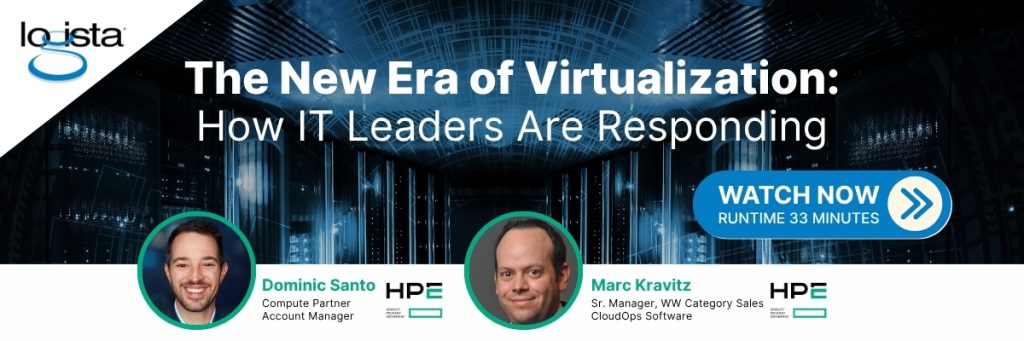
This post draws on a recent webinar we hosted with HPE, where IT leaders from across industries joined us to discuss this challenge. Some were just starting to think about it. Others were already mid-project. What came through clearly is that the organizations handling this best are the ones who got ahead of it with a clear strategy, rather than waiting for the renewal to force their hand.
Watch the webinar recording here:
Key Takeaways
- Many businesses are paying more for server software than they need to, often for features they are not using.
- There are now mature, enterprise-grade alternatives that offer the same core capabilities at a fraction of the cost.
- Switching does not mean replacing all your hardware or disrupting your operations overnight.
- The best first step is understanding what you have and what you need before making any decisions.
- Having the right technology partner in your corner makes this transition manageable rather than overwhelming.
Question 1: Why is everyone suddenly talking about this?
A familiar name, a changed deal
VMware has been the dominant player in server virtualization for decades. Virtualization software is what allows a single physical server to act like many separate computers, running different applications independently and efficiently. It is a foundational piece of how most business IT environments work.
The acquisition that changed the math
VMware was acquired by Broadcom in 2023, and that acquisition brought significant changes to how VMware software is licensed and sold. Many businesses have seen renewal costs increase, while others have found themselves evaluating new product bundles that include features they don’t use day-to-day. For organizations accustomed to a simpler licensing model, the result has been greater complexity and a growing need to reassess whether their current approach still makes sense.

The timing pressure is real
Renewal windows are approaching for many businesses, and the decisions made at renewal have multi-year implications. Organizations that go into that conversation without a clear sense of their options tend to either overpay or make reactive decisions they later regret. The good news is that the landscape has changed enough to offer alternatives worth considering.
Question 2: Are you paying for more than you need?
Most businesses use a fraction of what they pay for
The software packages being sold to businesses today are often loaded with capabilities designed for large enterprise environments: complex automation tools, multi-cloud management layers, and advanced analytics platforms. These are genuinely useful things for organizations with dedicated teams to manage them. For most small and mid-sized businesses, they sit unused while the billing clock keeps running.
What most businesses need
Strip away the extras, and what most organizations truly rely on comes down to a handful of core capabilities: the ability to run multiple applications on shared hardware efficiently, automatic failover so that if one server has a problem, your systems keep running, the ability to move workloads between servers without downtime, and straightforward backup and recovery. These are mature, well-understood capabilities. They do not require a top-tier software bundle to deliver.
A simpler pricing model exists
HPE has entered this space with a solution called Morpheus VM Essentials, built specifically around those core capabilities. Rather than charging based on the number of processor cores in your servers, which can get complicated fast as hardware evolves, it uses a straightforward per-socket model. One price per physical server processor, per year. For a typical two-processor server, that comes to $1,200 per year at list price, often less with partner pricing. For businesses that have been absorbing significant VMware price increases, the contrast can be substantial.

Question 3: What does switching involve?
This is where most businesses hesitate
The moment a business leader hears “we might need to switch our server software,” a reasonable set of concerns surfaces. Will we lose data? Are we going to have to replace all our hardware? Do we need to retrain our team? These are fair questions, and the honest answer to most of them is: less than you might think, if you approach it properly.
Your existing hardware can likely stay
One of the deliberate design decisions HPE made with this solution was hardware flexibility. The software is validated to run on a wide range of existing server infrastructure, including equipment you may already own. You are not being asked to rip out your current setup and start over. For most businesses, the hardware conversation is simpler than expected, and a good assessment of your current environment will tell you exactly where you stand before any decisions are made.
Your existing tools can likely stay too
Another common concern is around the other software that connects to your server environment. Backup tools are often deeply integrated into how a business protects its data. HPE has invested heavily to ensure VM Essentials works with the tools businesses already rely on, including newly available integrations with Veeam Data Platform and HPE Zerto Software for data protection and recovery.
Phased transitions reduce risk considerably
The organizations that navigate this most successfully start with a clear picture of their environment, identify which applications are good candidates for an early move, run a controlled test, and expand from there. Some businesses run their old and new environments side by side during the transition. Others move workload by workload over several months. The pace is yours to set.
A real example worth sharing
One organization HPE worked with had been running a traditional server setup and used an assessment tool to get a clear picture of their environment before making any changes. The data revealed they could reduce their server footprint by 40% by right-sizing their infrastructure, simply because they had been overprovisioned for years without realizing it. That reduction alone had a significant impact on their renewal costs, before they had even begun moving to new software. The lesson is that the assessment itself often surfaces savings opportunities that have nothing to do with which software you choose.
Where to Start
The most common mistake businesses make in this situation is waiting until renewal is imminent before thinking about it. By that point, the options narrow and the pressure to just sign whatever is in front of you increases. The businesses that come out of this transition in the best position are the ones that started the conversation early, got clear on what they have and need, and made a deliberate choice rather than a reactive one.
Logista works with businesses at every stage of this process. Whether you are just starting to think about it, actively evaluating options, or already mid-project and looking for support, we can help you navigate it without the headaches.
If you want to go deeper on any of the topics covered here, the full webinar recording is available here and is worth a look. Or if you are ready to talk about your specific situation, reach out to schedule a discovery conversation, and we will help you figure out where things stand and what makes sense for your business.
Frequently Asked Questions
We are not a large enterprise. Is this relevant to us?
Yes, and in some ways more so. Larger organizations have dedicated IT teams and procurement resources to absorb the complexity of these decisions. Smaller businesses often do not, which makes having a clear strategy even more important. The good news is that the alternatives now available are well-suited to smaller environments. The per-socket pricing model actually tends to favor smaller deployments, and the simplicity of the solution means less ongoing management overhead for lean IT teams. If you have even a handful of servers running business-critical applications, this conversation is worth having.
How disruptive is this kind of change to day-to-day operations?
Done well, minimally. Most businesses that work through this process with an experienced partner report less disruption than they expected. The applications your team relies on every day continue to run throughout the transition. The change is happening at the infrastructure level and is largely invisible to end users when managed properly. The bigger disruption risk is doing nothing and absorbing ongoing cost increases that constrain what else your business can invest in.
How do we know which option is right for us without becoming experts ourselves?
You do not need to become experts. That is what a technology partner is for. What you do need is a solid enough foundation to ask good questions and evaluate the answers you receive. The three questions in this post are a good starting point: What is actually driving our costs? What do we genuinely need versus what are we paying for? And what does a responsible transition look like for our specific situation? At the end of the day, you should walk away from that conversation knowing exactly what you have, what you need, and what it will cost.
About Logista Solutions
Logista Solutions is a nationally recognized leader in a broad range of technology management solutions. As one of the largest technology support providers in the U.S., Logista provides innovative and holistic solutions to help companies take control of their IT infrastructure and achieve better business outcomes. Popular services include Managed IT as a Service, VoIP and Unified Communications, Managed Print, Cloud Services and Asset Disposition.