
Key Takeaways
- A technology budget should support your business goals, not simply replace aging equipment.
- Creating a technology roadmap before building your budget helps prioritize investments and reduce unexpected expenses.
- Cybersecurity, AI, cloud services, recurring software subscriptions, and hardware refreshes should all be part of annual planning.
- Reviewing technology investments throughout the year allows businesses to adjust as priorities and technologies change.
- Working with a trusted technology partner can help organizations make informed decisions and maximize the value of every technology investment.
Technology is no longer a line item that’s reviewed only when equipment fails or software licenses come up for renewal. For many small and mid-sized businesses, technology influences productivity, cybersecurity, customer service, collaboration, and long-term growth.
As organizations prepare for 2027, technology budgeting has become more strategic. Businesses are balancing recurring software subscriptions, cybersecurity requirements, AI capabilities, cloud services, and hardware replacement cycles while making sure every investment supports broader business objectives.
In fact, Gartner research found that 75% of CFOs expect to increase technology spending, with many planning double-digit budget increases to support AI, cybersecurity, and digital initiatives. Those investments aren’t simply about adopting new technology; they’re about helping organizations remain competitive and prepared for future growth.
A thoughtful technology budget helps businesses avoid reactive spending, prioritize projects, and plan confidently for the future.

What Is a Technology Budget?
A technology budget is a financial plan that outlines how a business will invest in technology over a specific period. It typically includes hardware, software, cloud services, cybersecurity, networking, licensing, support, employee training, and emerging technologies such as AI.
Rather than focusing only on next year’s purchases, an effective technology budget aligns technology investments with business goals while accounting for both one-time purchases and recurring costs.
Why Should Businesses Create a Technology Roadmap Before Building a Budget?
One of the most common budgeting mistakes organizations make is deciding what to purchase before determining where the business is headed.
A technology roadmap provides a longer-term view of your technology priorities, typically covering the next one to three years. It identifies planned upgrades, infrastructure improvements, cybersecurity initiatives, cloud projects, AI adoption, and hardware refreshes before they become urgent.
Your budget then becomes the financial plan that supports that roadmap.
Without a roadmap, businesses often find themselves reacting to unexpected equipment failures or unplanned projects. With one in place, technology investments become more predictable and easier to prioritize.
For example, a roadmap may identify:
- Replacing aging laptops over the next two years
- Upgrading network infrastructure
- Expanding Microsoft 365 capabilities
- Implementing additional cybersecurity protections
- Evaluating AI tools to improve productivity
- Modernizing backup and disaster recovery
Instead of trying to fund everything at once, organizations can spread investments across multiple budget cycles.

Start with Your Business Goals
Before discussing budgets, ask questions such as:
- Is the business planning to grow?
- Will additional locations or remote employees require new technology?
- Are there cybersecurity or compliance requirements to address?
- Can automation reduce repetitive work?
- Are customers expecting better digital experiences?
The answers help determine which technology investments deserve priority.
When business objectives drive technology decisions, budgets become much easier to justify and measure.
Evaluate Your Current Technology
A thorough technology assessment often reveals opportunities to improve performance while avoiding unnecessary spending.
Review areas such as:
- Computer and laptop age
- Server and network infrastructure
- Wireless coverage
- Microsoft 365 licensing
- Cloud services
- Backup and disaster recovery
- Cybersecurity tools
- Internet connectivity
- Software subscriptions
This assessment also helps identify overlapping applications or unused licenses that may be increasing monthly costs without providing value.
How Should AI Fit Into Your Technology Budget?
Artificial intelligence is quickly becoming part of everyday business applications rather than a separate technology initiative.
Many organizations are evaluating Microsoft Copilot, AI-powered search, meeting assistants, document automation, customer service tools, and data analysis capabilities.
The question is no longer whether AI belongs in your technology budget, but where it delivers measurable value.
As you evaluate AI investments, consider:
- Which business processes could benefit from automation?
- Are AI features already included in software you own?
- Will additional licensing be required?
- Do employees need training?
- Are governance and security policies in place?
Many businesses can begin by expanding the AI capabilities already available within Microsoft 365 or other existing platforms before investing in standalone tools.
Budget for Cybersecurity from the Beginning
Cybersecurity should not be treated as a separate project that competes with other technology investments.
Instead, it should be considered part of every technology decision.
Whether you’re purchasing laptops, migrating to the cloud, reviewing your Microsoft 365 environment, or implementing AI tools, security should be part of the conversation.
Technology budgets should account for investments such as:
- Endpoint protection
- Multi-factor authentication
- Email security
- Backup and disaster recovery
- Security awareness training
- Vulnerability management
- Firewall upgrades
- Identity and access management
Planning for these investments annually is often less disruptive than responding to a cyberattack or compliance issue unexpectedly.
Don’t Forget the Costs That Continue Every Month
Technology budgets are no longer built around occasional hardware purchases.
Today, many technology expenses recur every month or every year.
These may include:
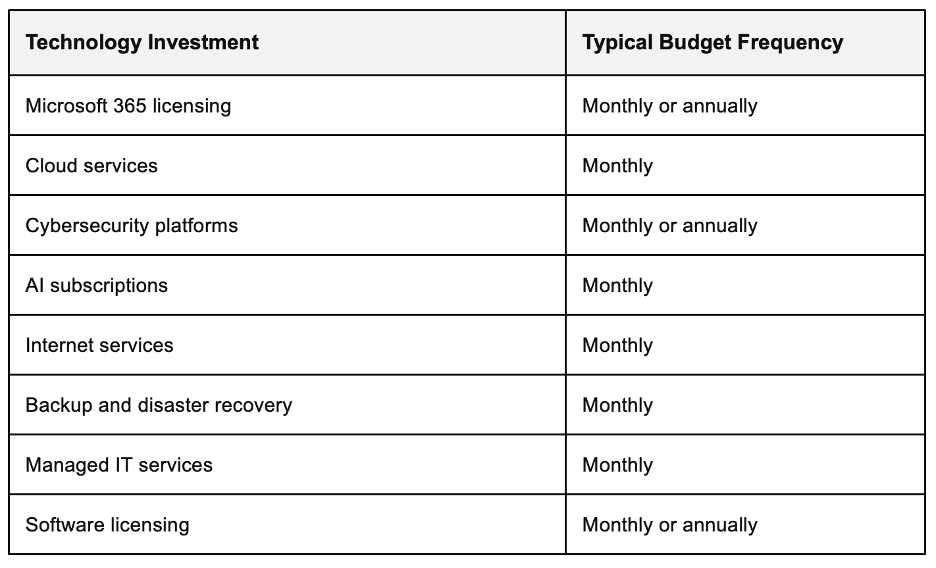
Understanding these recurring expenses helps create a more accurate annual technology budget while reducing surprises throughout the year.
Plan Hardware Refreshes Before Equipment Fails
Waiting until a computer or server stops working often leads to rushed purchasing decisions, unexpected downtime, and higher costs.
Instead, businesses should plan hardware replacement as part of a multi-year technology roadmap.
Most organizations benefit from regularly reviewing the age and condition of:
- Laptops and desktops
- Servers
- Firewalls
- Wireless access points
- Network switches
- Printers and multifunction devices
Replacing technology on a planned schedule allows organizations to spread costs over multiple years while reducing the likelihood of unexpected disruptions.
Review Your Technology Budget Throughout the Year
Business priorities change. New cybersecurity threats emerge. Software vendors introduce new capabilities. AI continues to evolve at a rapid pace.
Rather than creating a budget once a year and filing it away, schedule periodic reviews to determine whether planned investments still align with current business needs.
Regular reviews also create opportunities to adjust spending, retire unused software, or accelerate projects that support business growth.
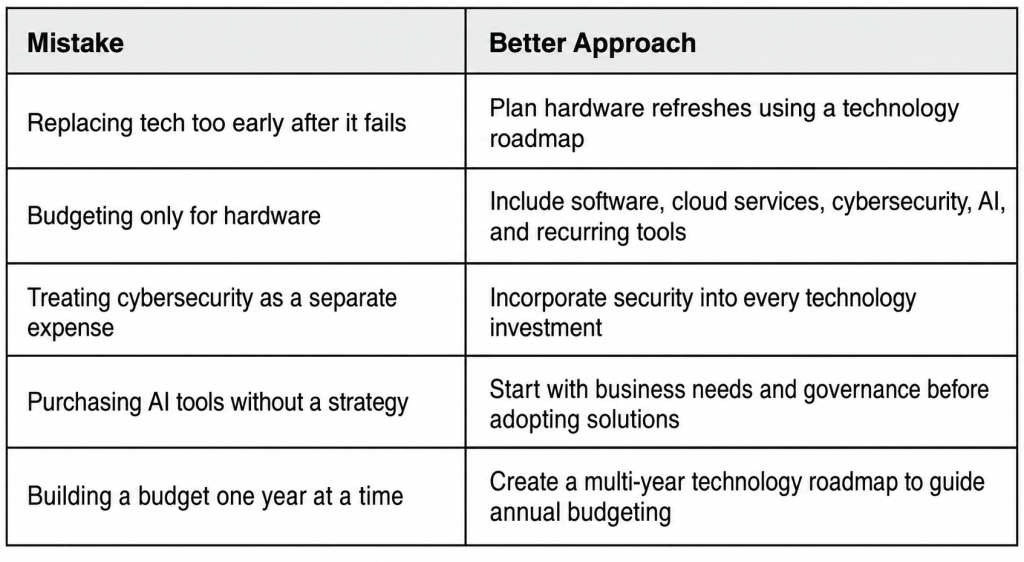
Common Technology Budgeting Mistakes
Preparing for 2027 Starts Today
Technology budgeting has evolved beyond estimating the cost of new computers or software licenses. Today’s organizations need a strategy that balances security, productivity, cloud services, AI, recurring subscriptions, and future growth.
By building a technology roadmap first, evaluating current systems, and aligning investments with business goals, organizations can create budgets that support both today’s priorities and tomorrow’s opportunities.
Technology will continue to change. A thoughtful planning process helps ensure your business is ready for whatever comes next.
Frequently Asked Questions
What should be included in a technology budget?
A comprehensive technology budget should include hardware, software, cloud services, cybersecurity, networking, backup and disaster recovery, AI tools, licensing, employee training, Managed IT services, and recurring subscription costs.
What is the difference between a technology budget and a technology roadmap?
A technology roadmap outlines your organization’s technology priorities over the next one to three years. A technology budget is the financial plan that funds those priorities over a specific budget period.
How often should businesses review their technology budget?
Most organizations should review their technology budget at least quarterly. Regular reviews help ensure spending continues to align with changing business goals, emerging technologies, cybersecurity needs, and new opportunities.
Build a Technology Strategy That Supports Your Business
Technology investments deliver the greatest value when they’re aligned with your long-term business goals. Whether you’re planning your 2027 technology budget, evaluating AI opportunities, or building a multi-year technology roadmap, having the right strategy in place can help you make informed decisions with confidence.
Logista Solutions helps organizations assess their current technology, identify opportunities for improvement, and develop technology strategies that support growth, strengthen cybersecurity, and maximize the value of every IT investment. Contact our team today to start planning your technology roadmap for 2027.
About Logista Solutions
Logista Solutions is a nationally recognized leader in a broad range of technology management solutions. As one of the largest technology support providers in the U.S., Logista provides innovative and holistic solutions to help companies take control of their IT infrastructure and achieve better business outcomes. Popular services include Managed IT as a Service, VoIP and Unified Communications, Managed Print, Cloud Services and Asset Disposition.