
Hackers are using artificial intelligence to create polished phishing emails, imitate voices, automate attacks, and build scams that look legitimate. Many of these threats target SMBs that may lack large internal security teams or advanced protections. Understanding how AI is changing cybercrime is the first step toward reducing risk.
Key Takeaways
- Hackers are using AI to create more believable phishing emails, fake voices, malware, and scams.
- SMBs are often targeted because they may lack dedicated cybersecurity resources.
- AI-powered attacks can happen faster and on a larger scale than traditional cyberattacks.
- Employee training and multi-layered cybersecurity tools are more important than ever.
- Managed IT providers like Logista Solutions help businesses monitor, detect, and respond to modern cyber threats.
AI Is Changing Cybercrime Faster Than Many Businesses Realize
Cybercriminals have always been quick to adapt to new technology. AI simply gives them another powerful tool.
In the past, many phishing emails were easy to spot because they contained spelling errors, awkward phrasing, or suspicious formatting. Today, AI tools can generate polished, professional messages in seconds. The obvious red flags employees once relied on are becoming much harder to spot.
AI also enables hackers to automate attacks on a massive scale. Instead of manually targeting a handful of businesses, criminals can now launch thousands of highly personalized phishing campaigns in a fraction of the time.
According to Deloitte, generative AI could enable fraud losses in the United States to reach $40 billion by 2027. That number highlights how quickly AI-powered threats are evolving.
For SMBs, this matters because attackers often look for organizations with limited cybersecurity resources, outdated systems, or employees who have not received security awareness training.

1. AI-Generated Phishing Emails Are More Convincing
Phishing attacks remain one of the most common ways hackers gain access to business systems. AI has made these attacks significantly more believable.
Instead of sending generic emails filled with mistakes, attackers can now use AI tools to:
- Mimic professional writing styles
- Personalize emails using publicly available information
- Create messages that sound like executives, vendors, or coworkers
- Generate content in multiple languages
- Adapt messaging based on the recipient’s industry or role
Imagine a small accounting firm receiving an email that appears to come directly from a long-time vendor. The message references a recent project, uses the correct company branding, and requests payment on an updated invoice.
An employee processes the payment without realizing the email was generated by an AI.
That type of attack is becoming increasingly common.
How to Defend Against It
Businesses should focus on layered protection, including:
- Security awareness training for employees
- Advanced email filtering and threat detection
- Multi-factor authentication (MFA)
- Verification procedures for financial requests
- Ongoing cybersecurity monitoring
Employees should also feel comfortable slowing down and verifying suspicious requests. A quick phone call can prevent a costly mistake.
2. Voice Cloning and Deepfake Technology Are Growing Threats
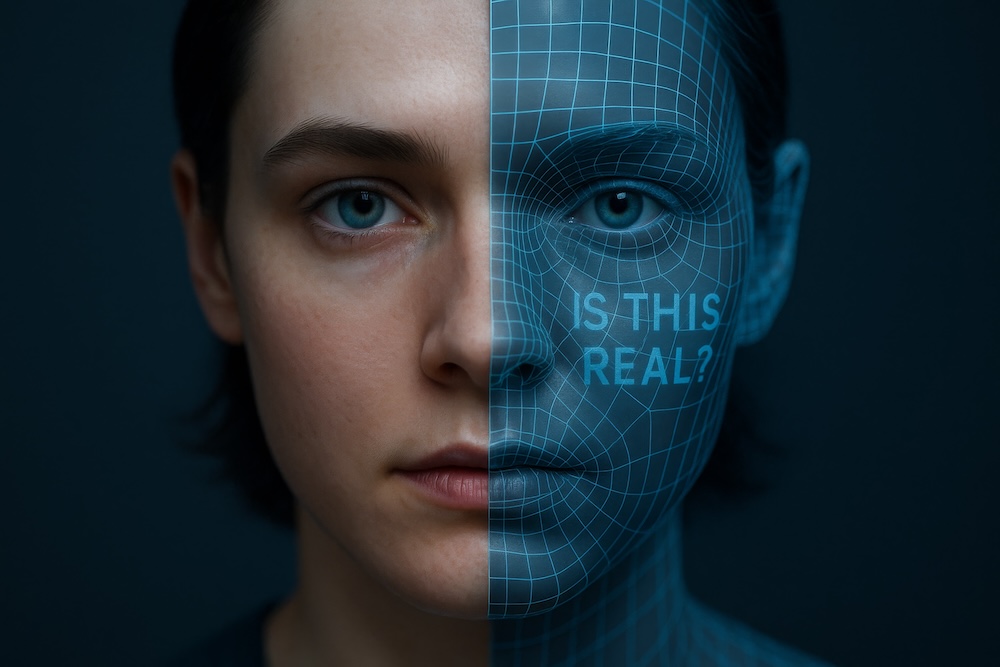
One of the more alarming ways hackers are using AI involves voice cloning and deepfake technology.
Using only a short audio clip from social media, webinars, podcasts, or online videos, criminals can create realistic voice recordings that imitate real people.
Some attackers are already using AI-generated voices to impersonate executives and pressure employees into transferring money or sharing sensitive information.
Consider this hypothetical scenario:
A company controller receives a voicemail from what sounds exactly like the CEO. The message sounds urgent and asks for an immediate wire transfer tied to a confidential acquisition.
The employee recognizes the voice and follows the instructions.
The problem is that the CEO never made the call.
As AI technology improves, these scams will become harder to detect.
How to Defend Against It
Businesses should establish clear verification policies for:
- Wire transfers
- Payroll changes
- Vendor payment updates
- Requests involving confidential data
Companies should also limit the amount of executive audio and video content publicly available when possible.
Security awareness training should include discussions of deepfakes and AI-driven impersonation scams to help employees understand the modern threats they face.
3. AI Helps Hackers Create Smarter Malware
AI is also changing the way malware is developed and deployed.
Traditional malware often relies on static code patterns that cybersecurity tools can recognize. AI-powered malware can adapt its behavior, evade detection, and change tactics in real time.
Some forms of AI-assisted malware can:
- Analyze system defenses before attacking
- Avoid triggering traditional antivirus tools
- Change code signatures to avoid detection
- Identify valuable data faster
- Automate lateral movement across a network
For SMBs with limited internal IT staff, these attacks can be difficult to identify before damage occurs.
How to Defend Against It
Modern cybersecurity requires more than basic antivirus software.
Businesses should consider:
- Endpoint detection and response (EDR)
- 24/7 network monitoring
- Regular patch management
- Secure backups
- Network segmentation
- Managed cybersecurity services
At Logista Solutions, security is approached as part of a broader IT strategy. Their integrated security and infrastructure services help businesses reduce risk while supporting productivity and long-term growth.
4. AI-Powered Password Attacks Are Faster
Hackers are also using AI to improve password cracking techniques.
AI tools can analyze common password patterns, predict likely password combinations, and automate credential attacks much faster than traditional brute force methods.
Many SMBs still rely on weak passwords or password reuse across multiple accounts. That creates unnecessary risk.
A single compromised login can give attackers access to:
- Email accounts
- Cloud applications
- Financial systems
- Customer data
- Internal business files
How to Defend Against It
Strong password policies remain important, but businesses should also implement:
- Multi-factor authentication
- Password managers
- Conditional access controls
- Single sign-on solutions
- Regular account audits
MFA is especially important because it adds another layer of protection even if credentials are compromised.
5. AI Can Supercharge Social Engineering Attacks
Social engineering attacks focus on manipulating people rather than technology.
AI allows attackers to gather information from LinkedIn, company websites, social media, and online directories to create highly targeted scams.
Instead of generic messages, employees may receive emails referencing:
- Real coworkers
- Current projects
- Vendor relationships
- Company events
- Industry terminology
That level of personalization increases the likelihood that someone will trust the message.
For example, a healthcare office manager could receive an AI-generated message that appears to come from a software vendor discussing a recent system upgrade. The message includes realistic technical language and requests login credentials to complete the installation.
Without proper training, an employee could easily assume the request is legitimate.
How to Defend Against It
The best defense against social engineering is a combination of:
- Employee education
- Cybersecurity awareness programs
- Strong internal processes
- Clear communication policies
Businesses should regularly remind employees to verify unexpected requests, especially those involving passwords, payments, or sensitive information.
Why SMBs Are Frequent Targets
Many small and mid-sized businesses assume hackers only target large corporations. Unfortunately, SMBs are often viewed as easier targets.
Attackers know that many smaller businesses:
- Have limited cybersecurity budgets
- Lack dedicated IT security teams
- Use outdated hardware or software
- Depend on a smaller internal staff
- May not have formal security policies
SMBs can also become entry points into larger supply chains and partner networks. This is one reason Managed IT and Cybersecurity Services have become so important for growing businesses.
Building a Smarter Defense Strategy
Cybersecurity is no longer just about installing antivirus software and hoping for the best.
Businesses need a proactive strategy that integrates people, processes, and technology.
That strategy should include:
Ongoing Employee Training
Employees are still one of the first lines of defense. Regular training helps staff recognize phishing attempts, suspicious links, deepfakes, and impersonation scams.
Strong Access Controls
Limiting access to sensitive systems reduces the damage attackers can cause if an account is compromised.
Regular Software Updates
Outdated systems create security gaps that hackers actively target.
Secure Backup and Recovery Plans
Reliable backups help businesses recover faster after ransomware or other cyber incidents.
Continuous Monitoring
Threats can happen at any time. Monitoring tools and Managed IT Services help businesses identify suspicious activity before it becomes a larger problem.
AI Is Not Going Away, and Neither Are the Threats
AI will continue to reshape the cybersecurity landscape.
While businesses benefit from AI-powered productivity tools, hackers will continue to use the same technology to launch more sophisticated attacks.
That does not mean SMBs should panic. It means businesses should take cybersecurity seriously and invest in modern protection strategies.
Working with a trusted Managed IT provider can help SMBs stay ahead of evolving threats without overwhelming internal teams.
FAQs
What should employees do if they suspect a phishing email or AI-generated scam?
Employees should avoid clicking links, downloading attachments, or responding to suspicious messages. Reporting the message to IT or a managed service provider promptly can help reduce risk.
Does cyber insurance cover AI-related cyberattacks?
Coverage depends on the policy. Many cyber insurance providers now require businesses to maintain specific cybersecurity protections, such as MFA, employee training, and endpoint security.
Are remote employees more vulnerable to AI-powered cyber threats?
Remote and hybrid employees can face additional risks because they often rely heavily on email, collaboration platforms, and cloud applications, where phishing and impersonation attacks are common.
How can businesses evaluate whether their cybersecurity strategy is strong enough?
Regular security assessments, vulnerability testing, employee training, and ongoing monitoring can help businesses identify gaps before attackers do.
Protect Your Business with the Right IT and Security Partner
AI is changing the way businesses work, but it is also changing the way cybercriminals operate. For SMBs, staying protected requires more than basic antivirus software or occasional password updates.
Logista Solutions helps businesses strengthen cybersecurity through ongoing IT support, monitoring, infrastructure management, and practical guidance tailored to today’s threats.
If your business is unsure whether its current security strategy is keeping pace with modern threats, the Logista Solutions team is here to help.
About Logista Solutions
Logista Solutions is a nationally recognized leader in a broad range of technology management solutions. As one of the largest technology support providers in the U.S., Logista provides innovative and holistic solutions to help companies take control of their IT infrastructure and achieve better business outcomes. Popular services include Managed IT as a Service, VoIP and Unified Communications, Managed Print, Cloud Services and Asset Disposition.